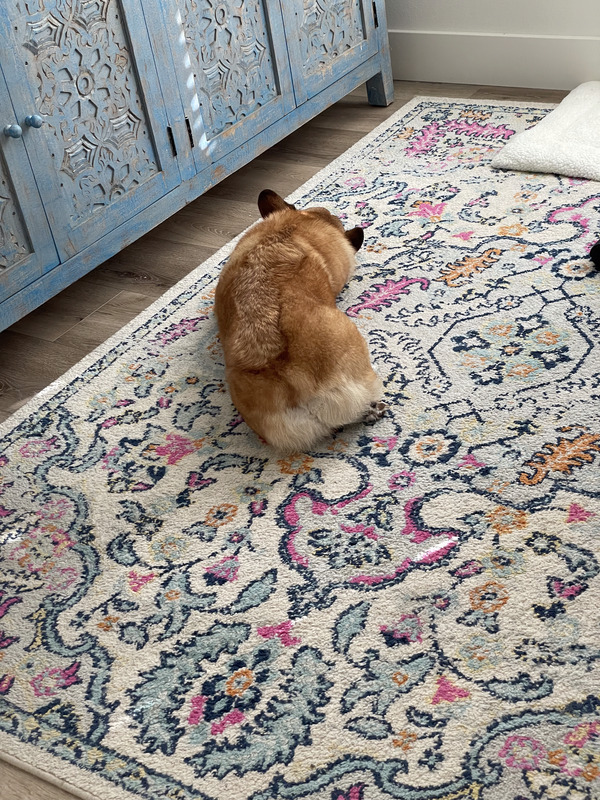
Before you cut portions or change foods to help your corgi lose weight, check with your vet. They can rule out medical causes and give you a calorie target.
Why this matters more for corgis than most breeds
Corgis are food-obsessed and prone to obesity, and they carry a long spine on dwarf legs. Extra weight loads that spine and those joints directly. With this breed, managing weight is also protecting the back. Obesity raises the risk of intervertebral disc disease, arthritis, hip problems, diabetes, and heart disease all at once.
What a healthy corgi weighs
Per the AKC standard, a corgi stands 10–12 inches at the shoulder, with an ideal weight of roughly 27–30 lb for males and 25–28 lb for females. But the number on the scale matters less than body condition. A muscular working corgi and a soft, overweight one can weigh the same. Judge the dog, not just the scale.
The at-home body-condition check
Do this monthly. It takes 30 seconds, and it matters more with a corgi than most dogs because the thick double coat hides weight gain from your eyes.
- Ribs: run your hands along the sides. You should feel the ribs easily, with only a thin layer of fat over them, like feeling the back of your hand. If you have to press to find them, your corgi is overweight.
- Waist (from above): looking down, you should see a visible tuck behind the ribcage. A straight or bulging outline means excess weight.
- Profile (from the side): the belly should tuck up behind the ribs, not hang level or sag.
The fluffy coat makes an overweight dog look normal and a normal dog look chunky. Trust your hands over the mirror, and ask your vet to assign a body-condition score at each visit so you have an objective baseline.
How to keep a corgi lean
- Measure every meal. Use an actual measuring cup or a gram scale. Eyeballed portions drift upward over time. Adjust the amount to your dog's body condition, not to the feeding chart on the bag (those are generous starting points, not prescriptions).
- Count treats toward the daily total. Treats, chews, and training rewards are calories. A good rule: treats should be no more than ~10% of daily intake. Use part of the regular meal ration as training rewards so you're not adding on top.
- Resist the beg. Corgis beg well and often. Feeding to the face instead of to the body is how corgis get heavy.
- Slow the eating down. A slow-feeder bowl or puzzle feeder makes meals last, adds mental work, and helps a food-driven dog feel satisfied.
- Exercise daily, in ways that are easy on the back (see below).
Helping an overweight corgi slim down
If the body-condition check says your corgi is carrying extra weight, don't crash-diet. Work with your vet on a plan. Typical elements:
- A measured calorie reduction (often a portion cut and/or a therapeutic weight-management diet), with a target of gradual, steady loss.
- More low-impact movement. Extra walks and swimming are easier on the spine and joints than jumping games.
- Monthly re-checks so you can adjust. Weight comes off slowly, so keep at it.
Sudden or stubborn weight gain despite good management can have medical causes (for example, thyroid issues). If the scale won't budge on an honest, measured diet, that's a conversation to have with your vet rather than just cutting food further.
Exercise that burns calories without stressing the back
Corgis need real daily exercise, but the goal is to move a lot without repetitive high-impact jumping. Favor:
- Brisk, sustained walks and gentle jogging.
- Swimming, which is low-impact cardio.
- Flat-ground fetch and scent/puzzle games (which tire the herding brain, too).
Go easy on jumping off furniture and out of cars, and repeated hard landings. Use a ramp. More on this in Common Corgi Health Problems.
FAQ
There's no single number. It depends on age, activity, metabolism, and the specific food. Start from the food's guidance for your dog's ideal weight (not current weight if overweight), then adjust up or down based on the monthly body-condition check. Your vet can give you a calorie target.
Yes. They're strongly food-motivated, low to the ground, and easily overfed, and pet-obesity organizations commonly flag the breed as frequently overweight. Of the breed's health risks, it's the one most within your control.
Lean body condition is associated with more healthy years of life in dogs generally, and in a breed this prone to disc and joint disease the benefit is larger: less load on the spine and joints means lower risk of the problems that most often shorten a corgi's mobility and life.