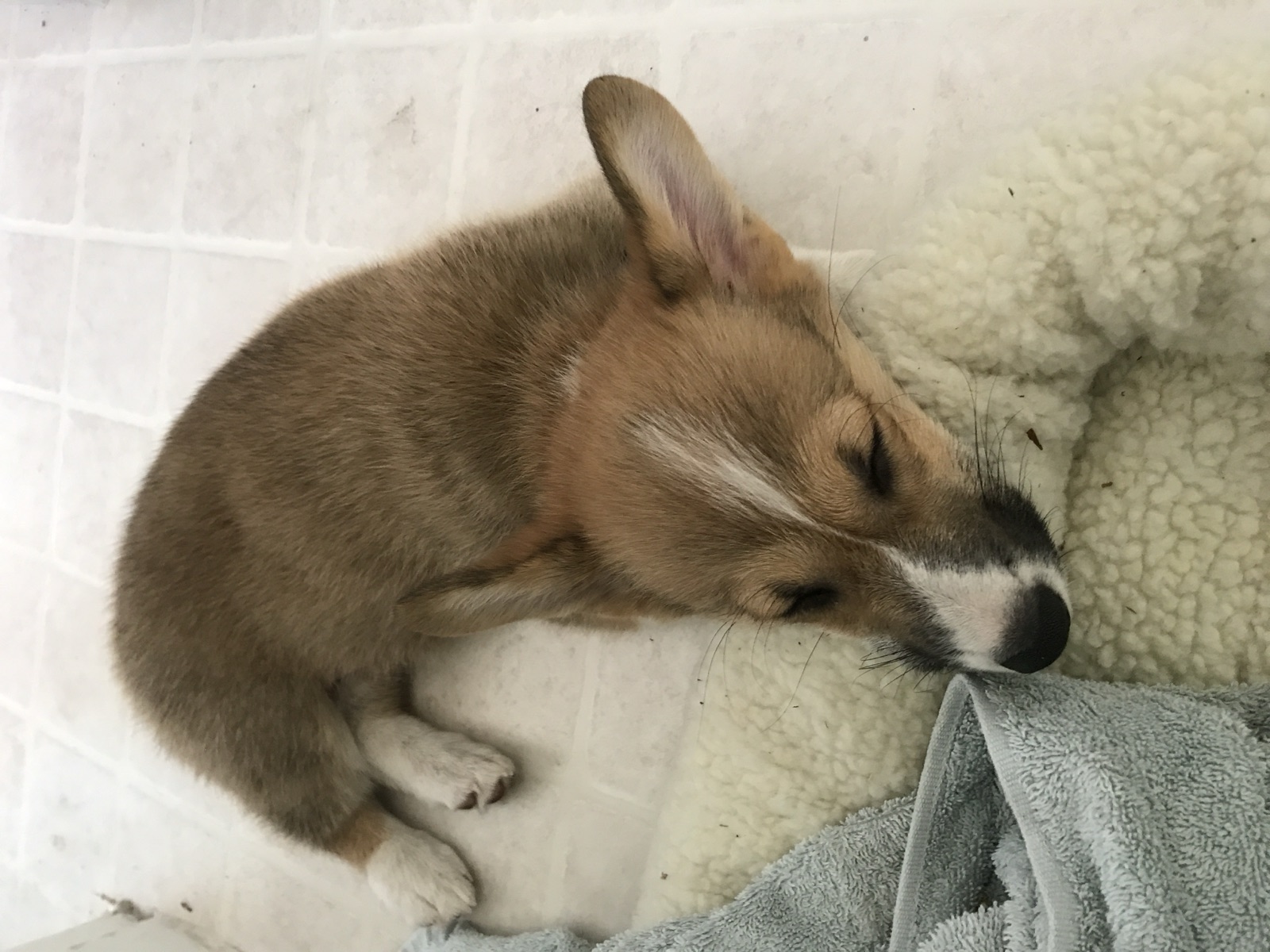
Every stage in this guide comes with feeding advice. Before you change what your corgi eats, or how much, check with your vet, especially for puppies, seniors, and dogs with a health condition.
The two rules that govern every stage
A corgi is food-motivated and obesity-prone, and it carries a long spine on dwarf legs. Excess weight loads that spine, so weight management is also back protection. Across dogs generally, staying lean adds healthy years of life — and in a breed this prone to disc and joint disease, the payoff is even bigger.
Puppy: 8 weeks to ~12 months
This is the stage that sets up the next 14 years. The work here is habits and socialization, not just cuteness management.
Bringing one home
Expect a responsible breeder to place puppies at a minimum of about 10 weeks, to screen the parents for the breed's inherited conditions, and to stay available for the dog's whole life. A good, health-testing breeder is the single best predictor of a healthy dog — far more than coat color or a "fluffy" gene.
Protect the back from day one
While the skeleton is still developing, discourage jumping off furniture and taking stairs at speed. Use ramps or lift the puppy, and teach an "off" cue. These habits are far easier to build now than to retrofit after an injury.
Socialize during the critical window
The first ~16 weeks are the key socialization period. Calmly and positively expose your puppy to people, other dogs, surfaces, sounds, kids, and gentle handling. Corgis are confident by nature; good early socialization keeps that confidence from tipping into pushiness or reactivity.
Train the two breed-specific problems early
- Heel-nipping. Redirect the herding bite onto toys and teach "leave it." Never let a puppy practice nipping ankles, however cute — it hurts from an adult.
- Barking. Teach a "quiet" / "enough" cue before barking becomes a self-rewarding habit.
Use reward-based, consistent training. Corgis are sensitive and intelligent, and they shut down or get stubborn under harsh physical correction. Basic obedience in year one is strongly recommended by the breed club and pays back for life.
Feed measured meals — not free-choice — on an appropriate puppy growth curve, and keep the growing puppy lean to protect developing joints. Overfeeding for fast growth is a mistake in this breed.
Adult: ~1 to 8 years — the maintenance years
Your adult corgi is capable, confident, and (if you've done the early work) a joy. Three jobs define this stage.
Weight and feeding — the number-one job
- Feed measured portions and adjust to the dog, not the number on the bag. Do a monthly body-condition check: you should feel the ribs easily and see a waist from above.
- Count treats — training treats included — toward the daily total. Use part of the meal ration for training rewards.
- Hold the line against the world-class corgi food beg. The breed is commonly flagged as overweight, and obesity raises the risk of joint damage, disc disease, diabetes, and heart disease.
For the full method, see Keeping Your Corgi Lean.
Exercise — high need, back-aware
Despite the short legs, corgis are working dogs that need daily physical and mental exercise. Under-exercised corgis become vocal, destructive, and pushy. Good outlets:
- Brisk walks, fetch, and scent/puzzle games.
- Dog sports the breed excels at — herding, agility, rally, obedience, and tracking. Mental work tires a herding brain as much as physical work does.
Minimize repetitive high-impact jumping — off couches, out of cars, off agility heights — and hard landings. Use ramps for the car and furniture. This isn't fragility; it's stacking the odds against a disc injury over the years.
Grooming and routine health
Brush the double coat several times a week (daily during a seasonal shed), keep nails short, brush teeth, and check ears. Stay current on annual vet exams, vaccines, dental care, and parasite prevention, and keep a baseline so age-related changes are easy to spot. Grooming detail lives in Surviving the Coat Blow.
Senior: ~8 years and up — watch the hind end
Corgis commonly live 12–15 years, so the senior stage is long. The theme here is preserving mobility.
Degenerative myelopathy — a progressive spinal-cord disease — typically first appears after age 8. Early signs are subtle: scuffing or dragging a hind paw, hind-end wobble, nails worn on one side, or the back legs crossing. Flag any hind-limb weakness to your vet promptly; it's worth distinguishing from arthritis or a disc problem. Learn more in Common Corgi Health Problems.
- Keep them lean and moving. Continued controlled exercise preserves the muscle that supports the spine — but double down on back protection (ramps everywhere, no jumping).
- Manage arthritis. The low body and any lifetime of extra weight catch up. Vet-guided pain management, joint supplements, orthopedic bedding, and traction rugs on slick floors all help.
- Adjust the diet to lower activity to avoid senior weight gain, and add senior bloodwork to catch age-related disease early.
- Lean on mobility aids when needed. Corgis adapt remarkably well to rear-support harnesses and wheeled carts because their front end stays strong — a dog with advanced arthritis or DM can have good quality of life for a long time.
Life-stage cheat sheet
| Stage | Top priority | Watch for |
|---|---|---|
| Puppy (8 wk–1 yr) | Socialization + early training; lean, slow growth | Heel-nipping and barking becoming habits; stair/furniture jumping |
| Adult (1–8 yr) | Weight control; daily physical + mental exercise | Creeping weight gain (check by feel); back-stressing activities |
| Senior (8 yr+) | Preserve mobility; back protection | Hind-limb weakness, arthritis, senior weight gain |